Listed at £447k, Sold at £368k: Why the Asking Price Is Fiction and What to Do About It
If you've heard Guillaume Black speak once before, you'll have heard this: deals are made, not found. And the asking price is irrelevant.
Over years of watching thousands of deals in the Property Filter ecosystem, the natural discrepancy between asking prices and sale agreed prices has sat around 10-15% nationally. You see it when you compare the Rightmove asking price index against the Nationwide or Halifax completed transaction indices. One tracks what sellers want. The other tracks what buyers actually pay.
Same market. Two completely different numbers.
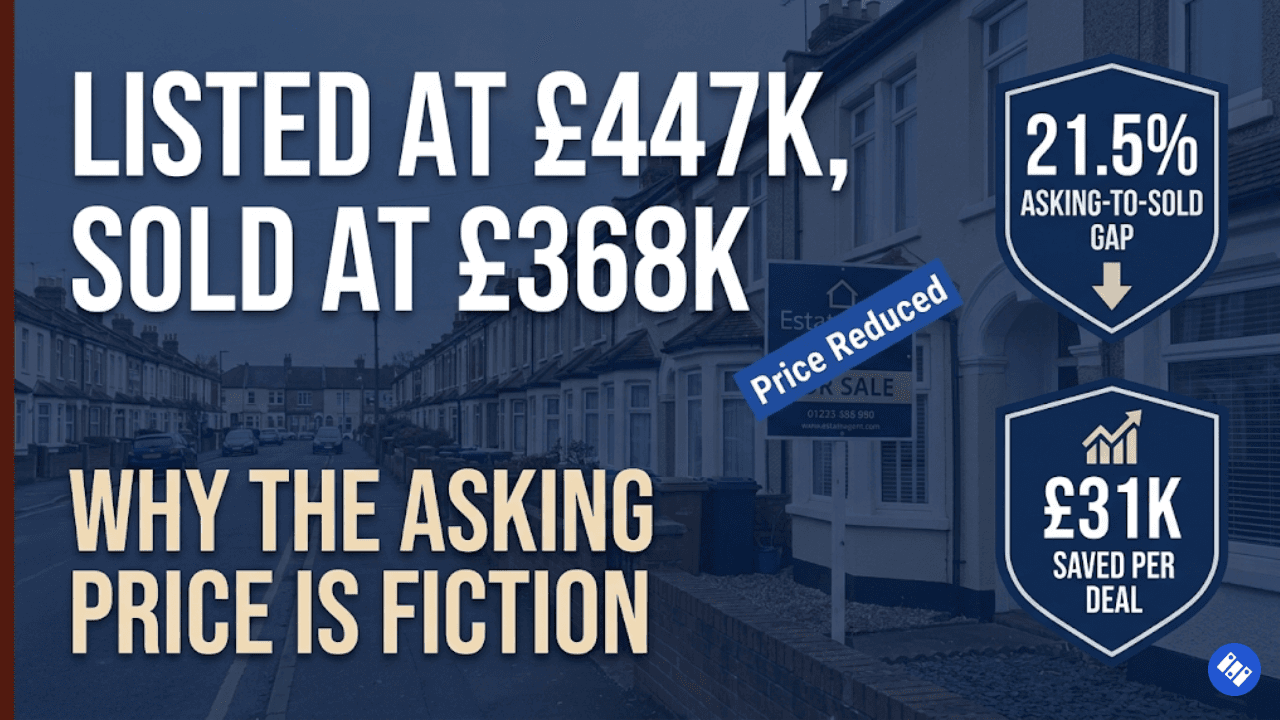
What's changed in 2026 is the size of the gap. It's not 15% any more. It's 21.5%. And in the spring, it peaked above 27%.
The Numbers That Tell the Story
Metric | Current | Long-term average |
|---|---|---|
Average UK listing price | £447,000 | - |
Average sale agreed price | £368,000 | - |
Gap between asking and sold | 21.5% | 16-17% |
Price cuts as % of stock | 13.4% | 10.7% |
Homes leaving agents unsold | 46.1% | ~42% |
Data source: Property Industry Eye / TwentyCi, May 2026.
The pattern is consistent: sellers are pricing based on 2024 expectations. The market is paying 2026 reality. And the result is a gap between hope and reality that's wider than anything we've tracked in recent years.
Why Most Investors Get This Wrong
The investor who scrolls Rightmove, sees a property listed at £350,000, and thinks "that doesn't stack at my numbers" has just eliminated a deal that might agree at £275,000-£295,000.
They're screening based on the fiction (asking price), not the reality (what the market is actually paying).
When the average gap between asking and sold is 21.5%, an offer at 20% below asking isn't aggressive. It's average. It's what the market data says the property will likely sell for.
The investors closing deals right now understand this. They:
Ignore the asking price entirely. They run their own numbers based on comparables, yield targets, and exit strategy.
Target motivated sellers. Properties reduced multiple times, sales fallen through, back on market, long time available. These are sellers who will accept reality faster.
Make offers based on their numbers, not the agent's. And they don't apologise for it.
Follow up. The first offer gets a no. The second, after the property has sat for another month with no interest, gets a different conversation.
"Forget the asking price. Offer what works for your numbers, then follow up until it's a yes."
How to Run the Numbers in Under 3 Minutes
This is where most investors lose time. Researching comparables, estimating refurb costs, calculating yields, modelling different exit strategies. It takes hours per property. So they do it for 2 or 3, instead of the 20 or 30 they should be assessing.
Property Filter's Deal Calculator changes that equation. Pick a property. Plug in your offer price (not the asking price). Add your refurb estimate, your finance costs, your target yield or flip margin. The calculator tells you whether the deal stacks across multiple strategies, so you can compare a flip against a rental against an HMO conversion, all in one view.
In under three minutes you know:
Whether the deal works at your offer price
Which strategy gives the best return
What your maximum offer should be
Whether it's worth picking up the phone
Combine that with AI-generated reports (comparables, risk flags, strategy analysis) and you can go from "I saw a property" to "I have a full assessment ready to share with my broker" in the time it takes to make a coffee.
The Direct-to-Vendor Multiplier
The 21.5% gap is the on-market average. It's what happens when sellers list with agents, sit for months, and eventually accept a lower offer.
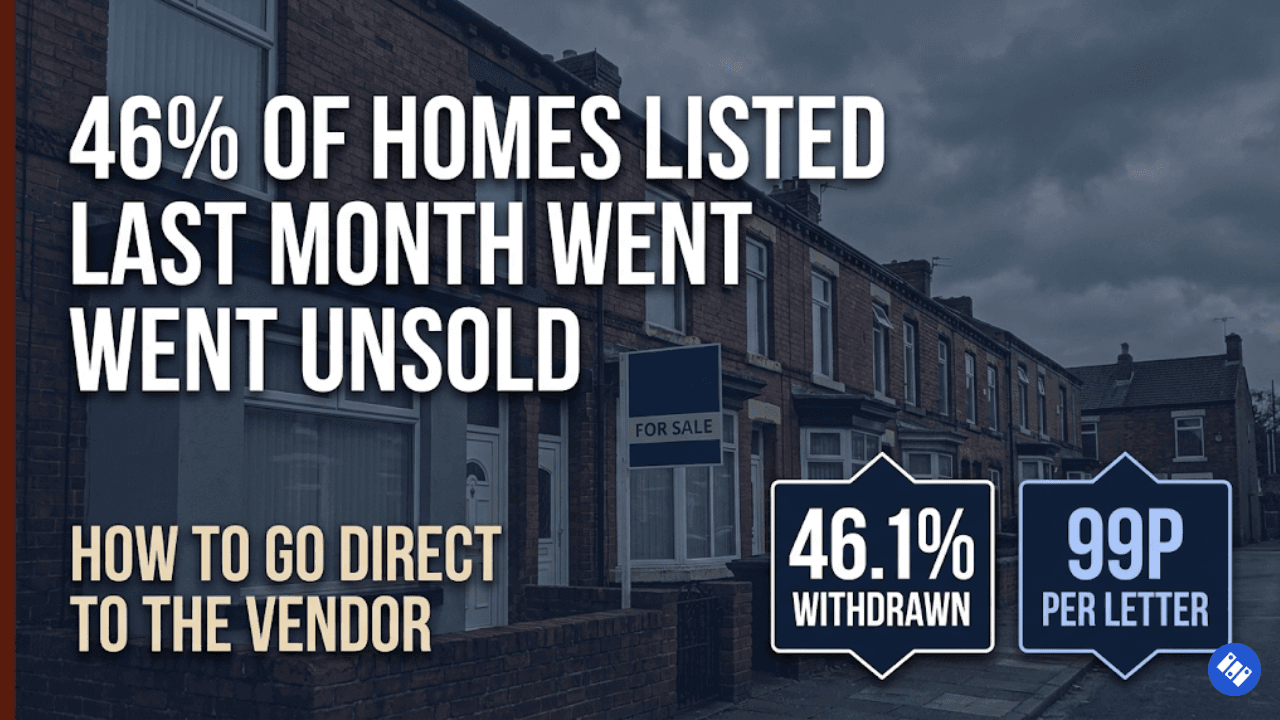
But what about the 46% of properties that withdraw from the market entirely? Those sellers are still motivated. They still need to sell. They just no longer have an agent managing the process.
If you go direct to the vendor on a withdrawn property, you skip the inflated asking price altogether. The conversation starts from a different place. No agent anchoring expectations. No competing offers. A direct discussion between a motivated seller and a prepared investor.
In Property Filter, you can filter specifically for withdrawn properties, see the full price history, and write to the vendor directly. The gap between asking and reality is 21.5% on the open market. Direct to vendor, with a motivated seller who's been stuck for months, the discount can be significantly larger.
Why This Window Closes
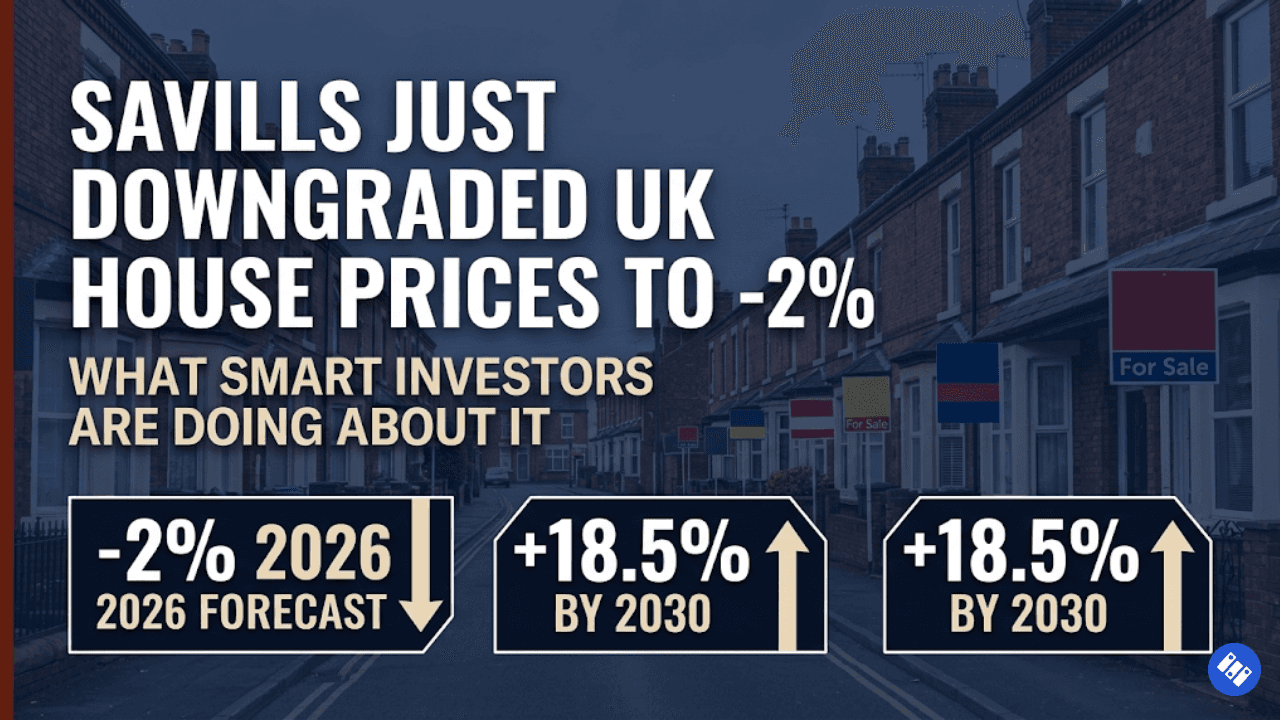
Savills forecasts prices recovering from 2027:
Year | Forecast |
|---|---|
2027 | +2.5% |
2028 | +5.0% |
2029 | +6.0% |
2030 | +6.0% |
As the market recovers, sellers adjust expectations. Asking prices come down closer to reality. The gap narrows. Competition returns. The current environment, where you can offer 20%+ below asking and have it be entirely reasonable, is temporary.
The investors who act this summer buy at the bottom and capture the full 18.5% cumulative recovery. The investors who wait until September find themselves competing at tighter margins in a market that's already turning.
What Success Actually Looks Like
This isn't about making 50 offers and hoping for the best. It's about having a system that identifies the right properties, runs the numbers instantly, and puts you in front of motivated sellers before anyone else.
Property Filter members aren't working harder. They're working smarter:
Lead Generators scan every portal 24/7 and flag motivated sellers automatically
The Deal Calculator assesses any property in under 3 minutes
The Pipeline tracks every deal from first contact to completion
AI produces bespoke reports (comparables, strategy, risk flags) in minutes
The result: 3,250+ offers accepted in 12 months. £31,000 saved per deal on average. 1,800+ active investors using the same system.
Turn "Someday" Into "Deal Day"
The asking price is fiction. The sold price is reality. And the gap between the two has never been wider in your favour.
You have two choices. Keep scrolling Rightmove, judging deals by the asking price, and telling yourself nothing stacks. Or start using a system that shows you what the market is actually paying, finds the sellers who will accept it, and gives you the tools to act in minutes.
Stop scrolling. Start doing deals.
No credit card required. Cancel anytime.
Sources:
Property Industry Eye / Chris Watkin analysis, May 2026
TwentyCi portal tracking data
Savills Residential Forecast, June 2026