MEMBER's SUCCESS STORY
How Mark Burrows Used Property Filter to Spot a Motivated Commercial Seller and Buy at £55k Below Asking Price

Two retail shops in Shropshire. Thirteen months on the market. Purchased at £140,000 - £55,000 below asking.
Mark Burrows · Birmingham, West Midlands · Commercial Property Investor & Founder, MING Network
AT A GLANCE
Member
Mark Burrows
Company
MING Network / SureStay Group / MRB Property
Location
Birmingham, West Midlands
Strategy
Commercial property acquisition; rehousing vulnerable families
PF Feature Used
Price and Status History tab; custom filters; alerts
Result
Two retail shops purchased at £140,000 - £55,000 below asking price. New rental income: £22,500/year
"I knew these people were motivated. They'd had it for a long time. That was why I honed in on it - and it turned out to be a phenomenal deal."
Mark Burrows
Results like these are happening every week. See how Property Filter works.

Mark Burrows had been scrolling commercial portals for deals the same way most investors do - one listing at a time, with no way of knowing which sellers were actually ready to move. When he joined Property Filter and discovered the Price and Status History tab, everything changed. Within 6 months he had identified a commercial property in Oswestry, Shropshire that had been sitting on the market for 13 months, negotiated firmly on the back of that data, and secured two fully tenanted retail shops at a price £55,000 below asking.
Mark Burrows's challenge before Property Filter
Before joining Property Filter, Mark Burrows's approach to finding deals was the same one used by most investors: open Rightmove, open Rightmove Commercial, and start scrolling. For residential deals it was time-consuming. For commercial property it was worse. Without a way to filter for motivated sellers directly, Mark was wading through hundreds of listings without knowing which vendors were genuinely ready to move - and which were simply testing the market at an unrealistic price.
The problem was not just time. It was confidence. Without historical data on how long a property had been listed, how many times the price had changed, or whether it had been withdrawn and relisted, Mark had no way to know how strong a negotiating position he actually held. He was making offers without the information that would have made each offer far more precise.
Commercial property added an extra layer of complexity. Mark had been focused on residential strategies - rent-to-rent, service accommodation, buy-to-let, HMOs - before narrowing his focus to commercial acquisitions and his work rehousing vulnerable families. Switching strategies meant learning a new set of portals, a new set of signals, and a new way of reading the market.
"I was scrolling forever. I thought I was busy then, but I was even busier - and it was all good luck as far as finding deals was concerned."
How Mark Burrows uses Property Filter to find commercial deals
Mark joined Property Filter roughly two years before this interview. His first impression was one of overwhelm - there was so much data available that he described the platform as feeling like "a boy's toy." He found himself exploring deal after deal, clicking through motivation indicators, and watching price histories out of fascination rather than strategy. That changed when he sat down with the tutorial videos.
The Property Filter tutorial library walks members through how each strategy maps to the platform's filters and indicators. For Mark, this was the turning point. Once he narrowed his focus to commercial property and understood exactly which filters to apply, the platform became a precise property sourcing tool rather than a browsing tool. He set up his filters to match his target criteria and let the alerts do the searching.
His daily workflow now centres on two things: checking the Price and Status History tab on properties that catch his attention, and relying on alerts to surface new opportunities automatically. He applies the same analysis to commercial listings that he once applied to residential ones - watching for price drops, back-on-market signals, and extended time on market. He also uses Property Filter's yield and market data to validate the numbers before making any approach.
"Once you get used to it, you can go into the filters and tailor them to exactly how you want it. And then you just let the alerts bring the deals to you."
Mark Burrows's challenge before Property Filter
Before joining Property Filter, Mark Burrows's approach to finding deals was the same one used by most investors: open Rightmove, open Rightmove Commercial, and start scrolling. For residential deals it was time-consuming. For commercial property it was worse. Without a way to filter for motivated sellers directly, Mark was wading through hundreds of listings without knowing which vendors were genuinely ready to move - and which were simply testing the market at an unrealistic price.
The problem was not just time. It was confidence. Without historical data on how long a property had been listed, how many times the price had changed, or whether it had been withdrawn and relisted, Mark had no way to know how strong a negotiating position he actually held. He was making offers without the information that would have made each offer far more precise.
Commercial property added an extra layer of complexity. Mark had been focused on residential strategies - rent-to-rent, service accommodation, buy-to-let, HMOs - before narrowing his focus to commercial acquisitions and his work rehousing vulnerable families. Switching strategies meant learning a new set of portals, a new set of signals, and a new way of reading the market.
"I was scrolling forever. I thought I was busy then, but I was even busier - and it was all good luck as far as finding deals was concerned."
How Mark Burrows uses Property Filter to find commercial deals
Mark joined Property Filter roughly two years before this interview. His first impression was one of overwhelm - there was so much data available that he described the platform as feeling like "a boy's toy." He found himself exploring deal after deal, clicking through motivation indicators, and watching price histories out of fascination rather than strategy. That changed when he sat down with the tutorial videos.
The Property Filter tutorial library walks members through how each strategy maps to the platform's filters and indicators. For Mark, this was the turning point. Once he narrowed his focus to commercial property and understood exactly which filters to apply, the platform became a precise property sourcing tool rather than a browsing tool. He set up his filters to match his target criteria and let the alerts do the searching.
His daily workflow now centres on two things: checking the Price and Status History tab on properties that catch his attention, and relying on alerts to surface new opportunities automatically. He applies the same analysis to commercial listings that he once applied to residential ones - watching for price drops, back-on-market signals, and extended time on market. He also uses Property Filter's yield and market data to validate the numbers before making any approach.
"Once you get used to it, you can go into the filters and tailor them to exactly how you want it. And then you just let the alerts bring the deals to you."
Feature Spotlight
Mark Burrows's favourite Property Filter feature: Price and Status History
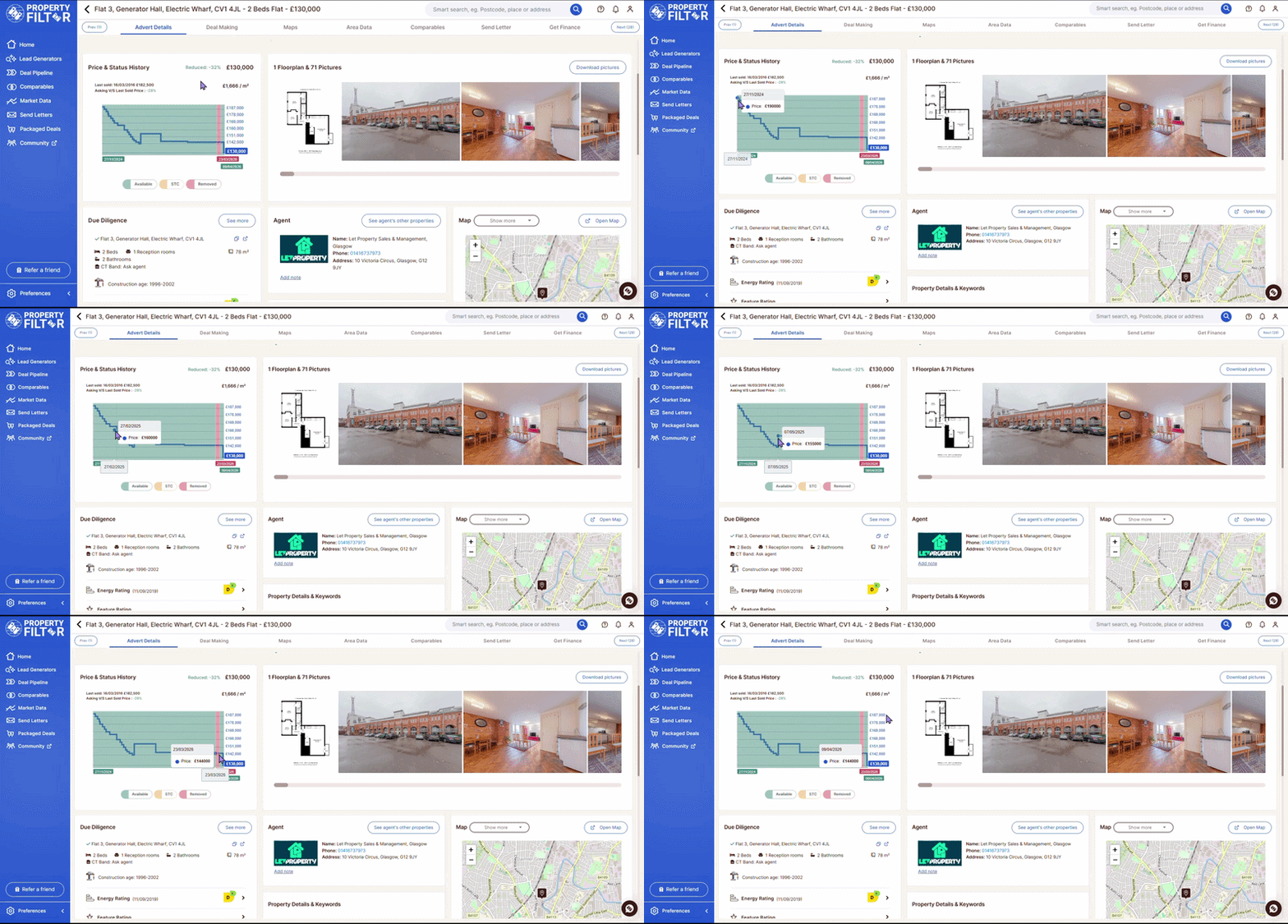
Mark's key tool for identifying motivated commercial sellers is the Price and Status History tab. It presents a visual graph showing every price change a property has gone through since it was first listed - alongside a record of every time it has been taken off and relisted on the market. For an investor focused on negotiating from a position of data, this is one of the most valuable tools on the platform.
"I always come back to those tabs - because that's where the deals are. Watching the price drop, watching how motivated they are, coming back to market, going off... that's exactly how I purchased mine."
Mark Burrows's favourite Property Filter feature: Price and Status History
Mark's key tool for identifying motivated commercial sellers is the Price and Status History tab. It presents a visual graph showing every price change a property has gone through since it was first listed - alongside a record of every time it has been taken off and relisted on the market. For an investor focused on negotiating from a position of data, this is one of the most valuable tools on the platform.
"I always come back to those tabs - because that's where the deals are. Watching the price drop, watching how motivated they are, coming back to market, going off... that's exactly how I purchased mine."
£195k
£195k
£195k
£195k
Asking price
£140k
£140k
£140k
£140k
Purchase price
£55k
£55k
£55k
£55k
Saved below asking
£22,500
£22,500
£22,500
£22,500
Annual rental income
13 months
13 months
13 months
13 months
On the market
The results: two shops, £140,000, and £22,500 in annual income
The deal that Mark points to as his clearest example of Property Filter in action began when he was searching for commercial opportunities in and around the Shropshire area - a region he knew well from having lived there previously. While viewing one property in Oswestry, he noticed a second building nearby with a for sale sign outside. He put the address into Property Filter and pulled up the history.
What he found confirmed his instincts. The property - two tenanted retail shops with a combined rental income of around £16,000 per year - had been on the market for approximately 13 months. The price had moved up and down multiple times. It had been sold, fallen through, and come back to market. By any measure, the seller was motivated. The asking price was £195,000. Mark, armed with the data, went in significantly below that and negotiated down to £140,000 - saving £55,000 on the listed price. Both shops came with tenants, and the yield at purchase was around 9.5%. If you are looking to understand what a good deal looks like in practice, watch the Property Filter demo and see how the platform surfaces exactly these kinds of opportunities.
The story did not end there. Shortly after completion, both tenants handed in their notice and left. For a commercial investor new to the retail sector, this could have been a serious setback. Instead, Mark used Property Filter's market and yield data to understand the local rental landscape, found two new tenants, and grew the annual income from £16,000 to £22,500. The property that looked like a risk turned into one of his strongest performers.
Watch Mark Burrows's full Property Filter story
Hear Mark describe the Oswestry deal in his own words - including how he used the Price and Status History tab to build his negotiating case and what happened after both tenants left.
The results: two shops, £140,000, and £22,500 in annual income
The deal that Mark points to as his clearest example of Property Filter in action began when he was searching for commercial opportunities in and around the Shropshire area - a region he knew well from having lived there previously. While viewing one property in Oswestry, he noticed a second building nearby with a for sale sign outside. He put the address into Property Filter and pulled up the history.
What he found confirmed his instincts. The property - two tenanted retail shops with a combined rental income of around £16,000 per year - had been on the market for approximately 13 months. The price had moved up and down multiple times. It had been sold, fallen through, and come back to market. By any measure, the seller was motivated. The asking price was £195,000. Mark, armed with the data, went in significantly below that and negotiated down to £140,000 - saving £55,000 on the listed price. Both shops came with tenants, and the yield at purchase was around 9.5%. If you are looking to understand what a good deal looks like in practice, watch the Property Filter demo and see how the platform surfaces exactly these kinds of opportunities.
The story did not end there. Shortly after completion, both tenants handed in their notice and left. For a commercial investor new to the retail sector, this could have been a serious setback. Instead, Mark used Property Filter's market and yield data to understand the local rental landscape, found two new tenants, and grew the annual income from £16,000 to £22,500. The property that looked like a risk turned into one of his strongest performers.
Watch Mark Burrows's full Property Filter story
Hear Mark describe the Oswestry deal in his own words - including how he used the Price and Status History tab to build his negotiating case and what happened after both tenants left.
Frequently asked questions
Can you use Property Filter to find commercial property deals?
What is the Price and Status History tab on Property Filter?
How do you identify motivated sellers using Property Filter?
What is the best way for a beginner to get started with Property Filter?
How long did it take Mark Burrows to see results with Property Filter?

Ready to find your next property deal?
Property Filter gives you the motivation data, the price history, and the alert tools to find deals the way Mark Burrows does - before anyone else does.
Join over 1,800 active members already using Property Filter to source deals across the UK.
Ready to find your next property deal?
Property Filter gives you the motivation data, the price history, and the alert tools to find deals the way Mark Burrows does - before anyone else does.
Join over 1,800 active members already using Property Filter to source deals across the UK.