MEMBER's SUCCESS STORY
How Andriy Flipped a Stockport Property for £70K+ Profit Using Property Filter's Motivated Seller Data

Stockport property bought at £190,000 - £100,000 below original asking price - refurbished and sold for £372,500, netting £70K+ profit after all costs
Andriy · Manchester · Property investor · Interviewed July 2025
AT A GLANCE
Member
Andriy Pidorpryhora
Location
Manchester
Background
Marketing and e-commerce (Coca-Cola, Myprotein); 3-4 years in property
Strategy
Buy-to-sell flips; motivated seller BMV acquisition
PF Feature Used
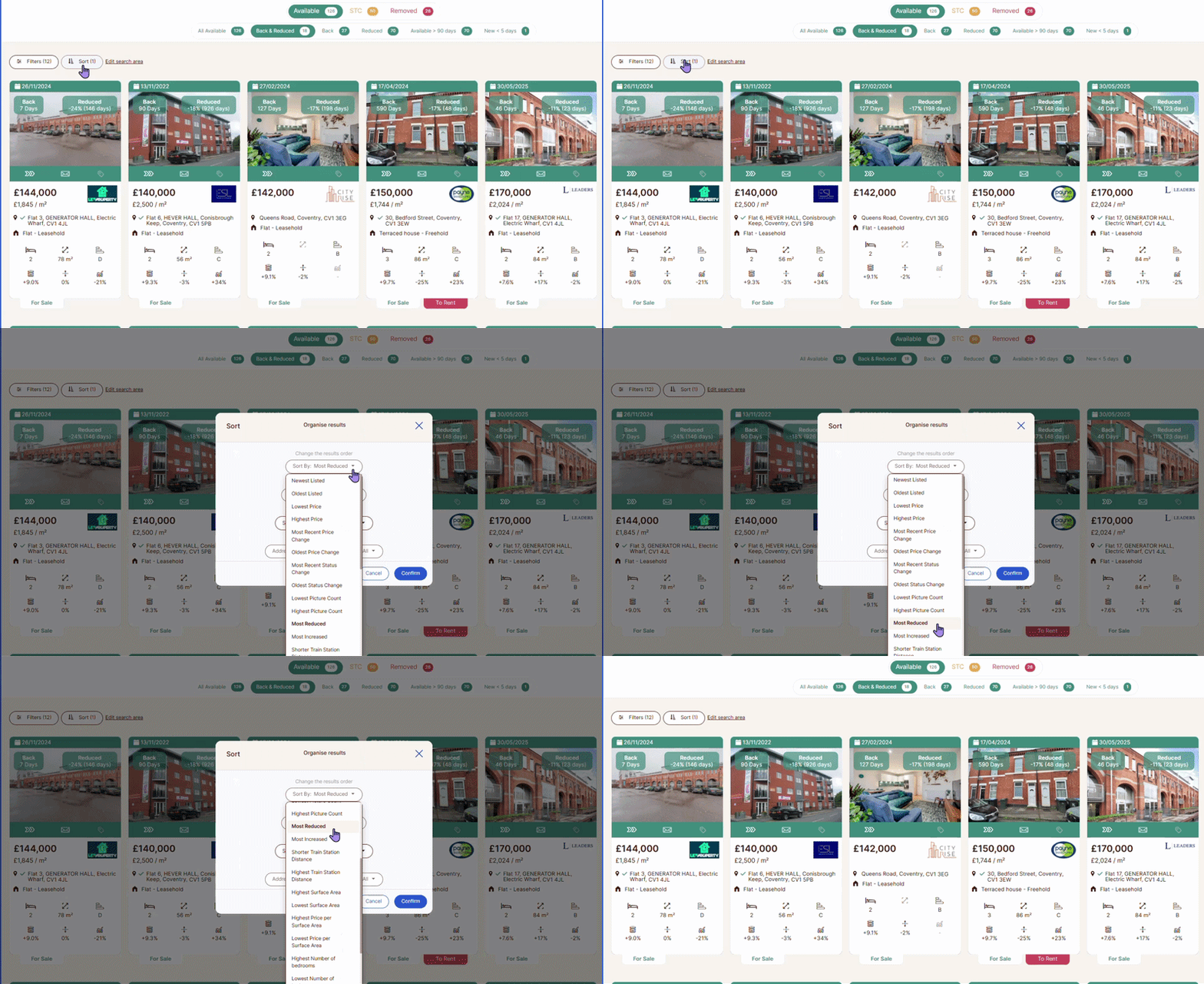
Below market average filter, sold and came back on market filter, most reduced sort
Deal 1
Original asking ~£290,000; found at £220,000 after 4-5 months on market; negotiated to £190,000; refurbed ~£70-73K; sold for £372,500; net profit ~£70K+
"The whole idea is you find the property that's already discounted, you negotiate it down a bit further, and then your margin is built in before you even start the refurb."
Andriy, property investor, Manchester
Results like these are happening every week. See how Property Filter works.

Andriy came to property from a marketing and e-commerce background, having worked with brands including Coca-Cola and Myprotein. Three to four years into property and two years into his Property Filter membership - which he opened with a business partner - he used three motivated seller filters to find, negotiate, and flip a Stockport property for over £70,000 profit.
Andriy's background and how he found Property Filter
Before property, Andriy spent his career in marketing and e-commerce. The discipline of working with data to understand consumer behaviour and identify opportunities translated directly into how he approached property investing - he was looking for a tool that would give him information other buyers did not have.
Andriy had been investing in property for three to four years when he and a business partner opened a shared Property Filter account. The appeal was the motivated seller data - the ability to look at the market not just by asking price, but by the circumstances behind each listing. Price history, how long a property had been sitting, whether it had previously sold and fallen through. The kind of context that does not appear anywhere on a standard portal search.
"With Property Filter you can really dig into the data - you can filter by properties that are below market average, that have been on the market for a long time, that came back on the market after being sold. That's what helps you find the motivated sellers."
The strategy Andriy settled on was straightforward but required the right data to execute consistently. Find properties already trading at a meaningful discount to their market value, then use that existing discount as the foundation for a further negotiation. The result, when it works, is an entry price 20-25% below market before a single brick is touched.
How Andriy uses Property Filter to find motivated sellers
Andriy runs three filters in combination when looking for a buy-to-sell opportunity. The first is the below market average filter - this surfaces properties already trading below comparable values in the same area, giving him a starting shortlist of potential discounted purchases. The second is the sold and came back on market filter, which identifies properties where a previous sale has fallen through. The third is the most reduced sort, which ranks properties by the size of their price reduction relative to the original asking price.
The logic behind stacking these filters is simple. A property that is below market average, has already had a failed sale, and has been reduced significantly from its original price is sending three separate motivated seller signals at once. The vendor has demonstrated they are willing to drop the price, they have been through a sale process that did not complete, and they are now priced below what comparable properties are achieving. That is the profile Andriy is looking for.
"If the property is already, say, 15-20% below market value, then usually I can negotiate another 5-10% off on top of that. So you end up somewhere around 20-25% below market value."
The property sourcing data from Property Filter also gives Andriy context when he enters a negotiation. He knows how long the property has been on the market, what the original asking price was, and what comparable properties in the area have sold for. That context lets him present a low offer with reasoning, rather than simply asking a vendor to accept a discount with no explanation.
Andriy and his business partner use their shared Property Filter account to track deals across different areas of Greater Manchester, with alerts set up so neither of them misses a relevant listing while it is still in the early stages.
Andriy's background and how he found Property Filter
Before property, Andriy spent his career in marketing and e-commerce. The discipline of working with data to understand consumer behaviour and identify opportunities translated directly into how he approached property investing - he was looking for a tool that would give him information other buyers did not have.
Andriy had been investing in property for three to four years when he and a business partner opened a shared Property Filter account. The appeal was the motivated seller data - the ability to look at the market not just by asking price, but by the circumstances behind each listing. Price history, how long a property had been sitting, whether it had previously sold and fallen through. The kind of context that does not appear anywhere on a standard portal search.
"With Property Filter you can really dig into the data - you can filter by properties that are below market average, that have been on the market for a long time, that came back on the market after being sold. That's what helps you find the motivated sellers."
The strategy Andriy settled on was straightforward but required the right data to execute consistently. Find properties already trading at a meaningful discount to their market value, then use that existing discount as the foundation for a further negotiation. The result, when it works, is an entry price 20-25% below market before a single brick is touched.
How Andriy uses Property Filter to find motivated sellers
Andriy runs three filters in combination when looking for a buy-to-sell opportunity. The first is the below market average filter - this surfaces properties already trading below comparable values in the same area, giving him a starting shortlist of potential discounted purchases. The second is the sold and came back on market filter, which identifies properties where a previous sale has fallen through. The third is the most reduced sort, which ranks properties by the size of their price reduction relative to the original asking price.
The logic behind stacking these filters is simple. A property that is below market average, has already had a failed sale, and has been reduced significantly from its original price is sending three separate motivated seller signals at once. The vendor has demonstrated they are willing to drop the price, they have been through a sale process that did not complete, and they are now priced below what comparable properties are achieving. That is the profile Andriy is looking for.
"If the property is already, say, 15-20% below market value, then usually I can negotiate another 5-10% off on top of that. So you end up somewhere around 20-25% below market value."
The property sourcing data from Property Filter also gives Andriy context when he enters a negotiation. He knows how long the property has been on the market, what the original asking price was, and what comparable properties in the area have sold for. That context lets him present a low offer with reasoning, rather than simply asking a vendor to accept a discount with no explanation.
Andriy and his business partner use their shared Property Filter account to track deals across different areas of Greater Manchester, with alerts set up so neither of them misses a relevant listing while it is still in the early stages.
Feature Spotlight
Andriy's key Property Filter filter: most reduced
Among the three filters Andriy uses in combination, the most reduced sort is the one he describes as the clearest signal of genuine motivation. A vendor who has already cut their asking price by 15% or more is demonstrating that selling matters more to them than holding out for a higher number. That is the position Andriy wants to be in when he picks up the phone.
"When a property has been reduced the most, that's the one that tells you the seller is really motivated. They've already moved on price once - and that means there's usually room to move again."
Andriy's key Property Filter filter: most reduced
Among the three filters Andriy uses in combination, the most reduced sort is the one he describes as the clearest signal of genuine motivation. A vendor who has already cut their asking price by 15% or more is demonstrating that selling matters more to them than holding out for a higher number. That is the position Andriy wants to be in when he picks up the phone.
"When a property has been reduced the most, that's the one that tells you the seller is really motivated. They've already moved on price once - and that means there's usually room to move again."
The Stockport deal: from £290,000 asking to £190,000 purchase - sold for £372,500
The Stockport deal: from £290,000 asking to £190,000 purchase - sold for £372,500
£190K
£190K
£190K
£190K
Purchase Price
negotiated from £220K
£372.5K
£372.5K
£372.5K
£372.5K
Resale Price
after refurbishment
£70K+
£70K+
£70K+
£70K+
Net Profit
after all costs
£100K
£100K
£100K
£100K
Total Reduction
from ~£290K original ask
~24%
~24%
~24%
~24%
Below Market
vs ~£250K market value
The Stockport property had been on the market for four to five months when Andriy found it through Property Filter. Its original asking price had been around £290,000. By the time it appeared in Andriy's filtered search, the price had come down to £220,000 - already a significant reduction, and below the market value for comparable properties in the area.
The property had also previously sold and come back onto the market, which added another layer to the motivated seller picture. A vendor who has been through a failed sale, reduced their price substantially, and is still sitting with an unsold property months later is in a very different negotiating position to someone who has just listed at a fresh asking price.
"It had been on the market for four or five months, it had already been sold and come back, and it had been reduced a lot from the original price. All the signals were pointing to a motivated seller."
Andriy negotiated the purchase price from £220,000 down to £190,000 - a further reduction of £30,000 on top of the £70,000 already taken off the original asking price. Against a market value of around £250,000, that placed his entry price approximately 24% below market before refurbishment had even begun.
The refurbishment cost approximately £70,000-£73,000. Andriy then sold the property for £372,500. After accounting for all costs - bridging finance, refurbishment, and fees - his net profit came to approximately £70,000-£73,000.
For investors looking to understand how motivated seller data translates into deal margins, this is a direct illustration. The same property, listed on the same portals - but with Property Filter's filters applied, Andriy could see what standard searches do not show. To see how Property Filter works in practice, watch the Property Filter demo.
Watch Andriy's full Property Filter story
Andriy walks through the full Stockport deal - how he identified the property using Property Filter's motivated seller filters, how the negotiation worked, and what the numbers looked like from purchase through to sale.
The Stockport property had been on the market for four to five months when Andriy found it through Property Filter. Its original asking price had been around £290,000. By the time it appeared in Andriy's filtered search, the price had come down to £220,000 - already a significant reduction, and below the market value for comparable properties in the area.
The property had also previously sold and come back onto the market, which added another layer to the motivated seller picture. A vendor who has been through a failed sale, reduced their price substantially, and is still sitting with an unsold property months later is in a very different negotiating position to someone who has just listed at a fresh asking price.
"It had been on the market for four or five months, it had already been sold and come back, and it had been reduced a lot from the original price. All the signals were pointing to a motivated seller."
Andriy negotiated the purchase price from £220,000 down to £190,000 - a further reduction of £30,000 on top of the £70,000 already taken off the original asking price. Against a market value of around £250,000, that placed his entry price approximately 24% below market before refurbishment had even begun.
The refurbishment cost approximately £70,000-£73,000. Andriy then sold the property for £372,500. After accounting for all costs - bridging finance, refurbishment, and fees - his net profit came to approximately £70,000-£73,000.
For investors looking to understand how motivated seller data translates into deal margins, this is a direct illustration. The same property, listed on the same portals - but with Property Filter's filters applied, Andriy could see what standard searches do not show. To see how Property Filter works in practice, watch the Property Filter demo.
Watch Andriy's full Property Filter story
Andriy walks through the full Stockport deal - how he identified the property using Property Filter's motivated seller filters, how the negotiation worked, and what the numbers looked like from purchase through to sale.
Frequently asked questions
What is Property Filter's most reduced filter and why does it identify motivated sellers?
How did Andriy find the Stockport property through Property Filter?
What strategy does Andriy use to buy property significantly below market value?
How does the sold and came back on market filter help property investors?
What profit did Andriy make on his Stockport flip and how was it calculated?

Ready to find your next motivated seller deal?
Andriy's story shows what happens when you filter the market by seller circumstance, not just asking price. Property Filter's motivated seller data is already in the platform.
See how it works and what it could do for your deal pipeline.
Ready to find your next motivated seller deal?
Andriy's story shows what happens when you filter the market by seller circumstance, not just asking price. Property Filter's motivated seller data is already in the platform.
See how it works and what it could do for your deal pipeline.